The Difference Between a Pub and a Gin Bar
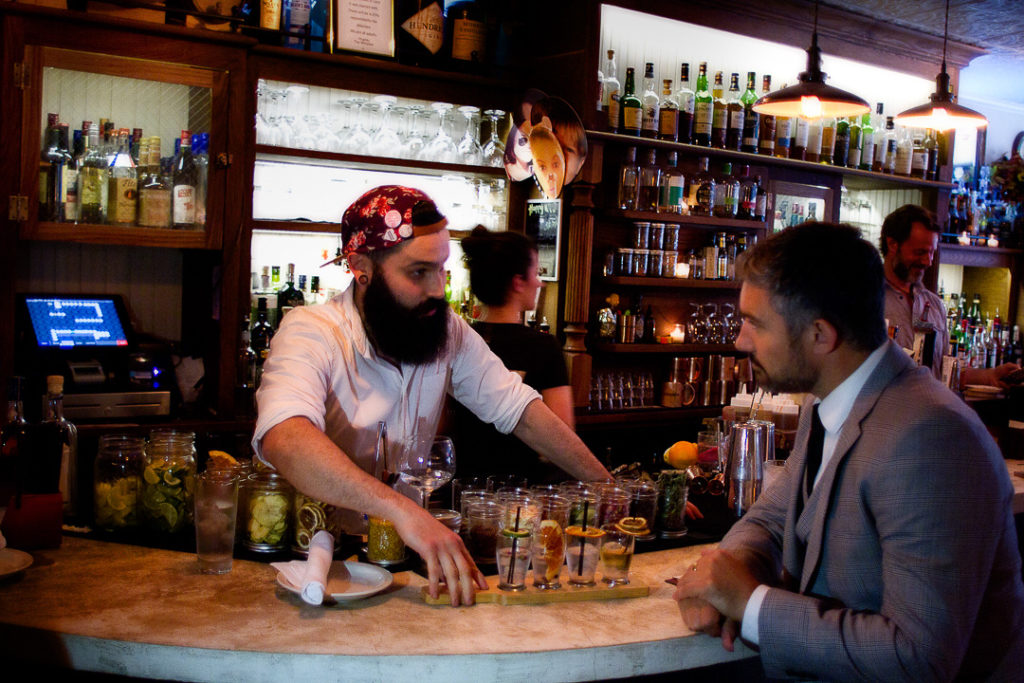
People often use pub, bar, cocktail bar, and gin bar as if they were interchangeable. They are not. You can drink gin in a pub, and you can usually order a beer in a gin bar, but the two places are built around different ideas. One is traditionally broad, social, and community-led. The other is usually narrower in focus, more curated, and often more deliberate about spirits, service, and presentation.
That distinction matters more than it first appears. If you are choosing a venue for a casual midweek pint, a date, a family lunch, or a birthday drinks booking, the difference affects everything from the soundtrack in the room to the size of the ice cubes in your glass. It affects how long you stay, what you spend, and what kind of evening you are likely to have.
Having spent plenty of time in both settings, from old village locals with worn carpet and a hand pump that has been polished by decades of use, to sleek city gin bars with backlit shelves of bottles and tonic menus longer than the food list, I can say the gap is not about quality. It is about purpose.
A pub is built for breadth, a gin bar for focus
At its core, a pub is a public house. That old term still explains a lot. A proper pub is meant to welcome a range of people at different times of day and for different reasons. Someone comes in for a quiet pint after work. A couple stop by for Sunday lunch. A group watches the match. A family meets for a birthday meal. A walker brings in a muddy dog and orders a half and a packet of crisps. The pub has room for all of them.
A gin bar, by contrast, is usually built around a specific drinks identity. The clue is in the name. The venue may serve wine, beer, and perhaps a few classic cocktails, but its personality revolves around gin. Not just pouring it, but presenting it as a category worth exploring. That means variety, curation, and a stronger sense of style.
This is the first Gin Bar real difference. A pub tends to be generalist. A gin bar tends to be specialist.
That does not automatically make the gin bar more refined or the pub more basic. Some pubs have exceptional drinks programs, and some gin bars are superficial places trading on pretty glassware. Still, the underlying intention is different. A pub is there to serve the public in a broad sense. A gin bar is there to serve a concept.
The drinks list tells you almost everything
If you want the quickest way to tell the two apart, read the menu.
In a pub, the drinks offer usually starts with draught beer and cider, then bottled beer, wines by the glass, standard spirits, soft drinks, and perhaps a modest cocktail list. Even in very good pubs, the gin selection may range from a few recognisable brands to perhaps a dozen if the operator has leaned into the trend. The point is choice across categories rather than depth in one.
In a Gin Bar, depth is the point. It is not unusual to see 30, 50, or even more than 100 gins stocked, especially in city centres or tourism-led venues. They may be organised by style, country, botanical profile, or recommended serve. A guest might be guided toward a classic London dry for a martini, a citrus-led gin for a bright highball, or a savoury bottling with rosemary and olive for something more unusual.
That level of range changes the nature of the order. In a pub, asking for “a gin and tonic” often produces a straightforward follow-up question, usually “Which gin?” if there are a few available, or no question at all if there is a default pour. In a gin bar, that same order can turn into a short conversation. What style do you like? Dry or floral? Do you want fever tree Indian tonic, a light tonic, or something with elderflower? Lemon, lime, orange, pink grapefruit, or no garnish at all?
Some customers love that. Others find it faintly exhausting.
Neither reaction is wrong. It depends on why you went out in the first place.
Service feels different because the role of staff is different
In a pub, the best staff are quick, warm, efficient, and good with a room full of regulars and walk-ins. They know who wants another pint before being asked. They remember that someone takes no ice in their whisky. They can keep a queue moving and still have a word with the old boy in the corner who comes in every Thursday at half six. Hospitality in a pub is often tied to pace and familiarity.
In a gin bar, staff are more likely to act as guides. thewinslownyc.com Gin Bar Product knowledge matters more. Not in a showy way, at least not in the better places, but in a useful one. They should know which tonic works with which gin, what garnish is doing in the glass beyond decoration, and how one distillery style differs from another. They may talk you through a flight, a tasting board, or a seasonal signature serve.
That changes the interaction. Pub service often prioritises comfort and speed. Gin bar service often prioritises explanation and recommendation.
There is, of course, overlap. A serious gastropub may have staff with excellent spirits knowledge. A poor gin bar may have people who can recite three botanicals but cannot read a table. Still, the service model usually reflects the venue’s core mission. If the drink itself is the main event, the staff need to support that.
Atmosphere is not just decor, it is social permission
The difference between a pub and a gin bar is also written into the room itself.
Pubs are usually designed for mixed use. You may find a bar area with stools, dining tables, a snug corner, perhaps a garden, and occasionally a function room upstairs. Materials tend to favour comfort and durability. Wood, worn leather, brass, chalkboards, and practical lighting are common because pubs host long stretches of use. They need to work at lunch, after work, late evening, and on weekends. They are spaces where people settle in.
A gin bar often has a more selective mood. Even when it aims for comfort, it tends to frame the drinking experience with more intent. Back bars are arranged to show off bottles. Glassware is part of the visual language. Lighting may be lower, music more stylised, and seating chosen to encourage shorter, sharper visits or a more date-night feel. The room tells you that what is in the glass deserves attention.
This is not only aesthetics. It shapes behaviour.
In a pub, there is broad social permission. You can be there for one drink or six. You can be talking business, celebrating a birthday, watching rugby, or waiting for your takeaway next door to open. The venue absorbs many kinds of use without awkwardness.
In a gin bar, your presence often carries a more defined expectation. You are there for drinks with intent. You are choosing from a menu. You are probably not bringing the dog in after a muddy walk or asking whether they have a children’s menu and crayons.
That social permission is one of the quietest but most important differences.
Food can be central in a pub, secondary in a gin bar
Many pubs survive or thrive because of food. In some areas, food is now the main economic engine. A good pub kitchen can carry the business through lunch and early evening, while drinks maintain margin and atmosphere. Pub menus vary widely, from basic pies and chips to polished seasonal cooking, but the idea of eating properly in a pub is completely normal.
A gin bar may offer food, and some do it very well, but it is rarely the defining feature unless the venue is really a restaurant-bar hybrid with a gin-led identity. More often, food supports the drinking experience. Think small plates, charcuterie, cheese, olives, or dishes designed to fit an evening of rounds rather than a full family meal.
This matters when people misread the category. Someone booking a table for eight expecting the broad comfort of a pub may be surprised to find a gin bar with limited savoury options, high stools, and a menu designed around cocktails and sharing boards. The reverse happens too. Someone hoping for a carefully made martini and staff who can discuss juniper character may be disappointed when they land in a pub whose strengths are cask ale and steak pie.
The building may have the same legal right to sell alcohol, but the guest experience is operating on a different script.
Price points usually follow the complexity of the offer
Money is not the only difference, but it is a practical one. Pubs often provide a wider range of accessible price points. You can order a soft drink, a pint, a simple spirit and mixer, or a meal and make the visit fit your budget. Because the model is broad, there is often more room for low-commitment spending.
Gin bars tend to pull the average spend upward. Premium spirits cost more. Specialist tonics cost more. Garnishes, glassware, staff time, and more elaborate preparation all push the price of each drink higher. A simple gin and tonic in a pub may feel like a background choice. In a gin bar, the same category can become a premium serve, priced accordingly.
That does not mean a gin bar is overpriced. Sometimes the value is entirely fair. If the pour is generous, the spirit is genuinely distinctive, the tonic is matched properly, and the serve is balanced rather than drowned in fruit salad, then the extra spend can feel worthwhile. But customers should understand what they are paying for. It is not just alcohol. It is selection, theatre, and specialist knowledge.
A pub, at its best, gives value through ease and reliability. A gin bar gives value through curation and detail.
Tradition matters, even when venues look modern
A pub carries deep cultural baggage, usually in a good way. It is tied to local identity, routine, seasonality, and neighbourhood life. Even modern pubs borrow from that history. They are places where people expect continuity. Regulars matter. The room often has memory.
A gin bar is usually more trend-responsive. That is not a criticism. It simply behaves more like a category-led hospitality concept. Gin itself has gone through waves of fashion, from the big premium boom of the 2010s to a more settled market where consumers are now a little sharper and less impressed by novelty for its own sake. Gin bars often rise on that energy, which makes them nimble but sometimes less rooted.
You can feel this in the way each venue talks about itself. Pubs tend to speak about welcome, food, local ales, live sport, roast dinners, garden space, and events. Gin bars tend to talk about collections, botanicals, tasting experiences, signatures, and pairings. One language is communal. The other is curated.
A good gin bar does not just stock gin, it understands it
This is where many people get confused. Owning many bottles does not automatically make a place a gin bar. I have seen venues label themselves that way because they carry two supermarket pink gins, one navy strength bottle, and a decorative copper still in the window. That is merchandising, not identity.
A real gin bar tends to show its expertise in subtler ways:
- the menu explains styles without patronising the guest
- tonics are chosen with care, not simply upsold
- garnishes add aroma and balance instead of clutter
- staff can steer both enthusiasts and newcomers
- classic serves are executed consistently
Those details are what separate a proper specialist venue from a generic bar with a few extra bottles.
The garnish point is worth dwelling on because it tells on a venue quickly. In weaker gin bars, garnishes become costume. Everything arrives overflowing with dehydrated citrus wheels, flowers, herbs, berries, and enough ice to build a wall. It photographs well and often drinks badly. In stronger gin bars, the garnish earns its place. A strip of grapefruit peel can sharpen a bright citrus gin. A sprig of rosemary can amplify resinous notes if used lightly. Too much of either and the drink becomes perfume.
That level of restraint is usually a sign that the place knows what it is doing.
Pubs are more forgiving, and that is part of their appeal
One reason pubs remain so durable is that they are socially forgiving. You do not need specialist knowledge to enjoy one. You do not need the right outfit, the right terminology, or a strong opinion about botanical distillation. You can walk into a good pub alone and not feel conspicuous. You can change your plan midway through the evening. You can pop in for twenty minutes and leave without feeling you have underused the venue.
That flexibility is a genuine strength. It is why pubs serve as anchor institutions in many towns and neighbourhoods. They are one of the few hospitality spaces that can accommodate different ages, incomes, and purposes under one roof without much friction.
A gin bar can be welcoming too, certainly, but it is usually less elastic. The more specialist a venue becomes, the more it attracts a narrower mode of use. That can produce brilliant experiences, especially for people who care about spirits, but it also means the room is less likely to feel like common ground.
The overlap is growing, which can blur the edges
Hospitality has become more hybrid over the past decade. Plenty of pubs have improved their back bars, added premium tonics, and trained staff to serve better G and Ts. At the same time, many gin bars have softened their focus by adding craft beer, low and no alcohol options, and stronger food offers because relying on one category alone can be risky.
As a result, the line is not always crisp.
A country pub may stock 25 gins because local demand supports it. A city gin bar may host Sunday roasts because brunch and food service drive footfall. Some of the best venues ignore neat labels altogether and simply build a strong, coherent offer around what their guests actually want.
Still, when you strip away the overlap, the distinction remains useful. Ask what the place is fundamentally trying to be. If it aims to serve many kinds of guest with a broad, welcoming offer, it is operating like a pub. If it aims to distinguish itself through depth of gin choice and a more specialist drinking experience, it is operating like a gin bar.
Which one suits the occasion?
This is often the question behind the question. People are not usually seeking a textbook definition. They want to know where they should go.
For a spontaneous catch-up, a live match, a substantial meal, or a mixed-age group with varied tastes, a pub is generally the safer choice. It has more room for compromise. Beer drinkers, wine drinkers, designated drivers, and children can usually all be accommodated without strain.
For a date, a smaller celebration, or an evening where the drinks are the main event, a gin bar often makes more sense. It gives you something to talk about, especially if the menu is well put together and the staff are good at reading how much guidance you actually want.
There is also a simple question of energy. If you want comfort, familiarity, and the option to drift, choose a pub. If you want concentration, detail, and a stronger sense of occasion in the glass, choose a gin bar.
The easiest test is the one in front of you
If you walk into an unfamiliar venue and want to know which category you are really in, notice what the room seems to reward. Does it reward lingering over a familiar order, or exploring a specialist one? Do people seem to be there for the place itself, or for a category of drink the place happens to showcase? Is the conversation at the table about catching up, or about what to order next?
A pub asks, in effect, “What would make you comfortable?” A gin bar asks, “What would you like to discover?”
That is the clearest difference between them. One is built around social range. The other is built around spirit-led focus. Both can be excellent. Both can be disappointing. But when they are done well, they satisfy different kinds of thirst.
The Winslow
243 E 14th St
New York, NY 10003, United States
Phone: +1 212-777-7717
FAQ About Gin Bar
How to do a gin tasting?
Start with a small pour and gently smell the gin before taking a small sip. Notice its juniper, citrus, floral or spice notes, then compare how the flavor changes with a little water or tonic. At a gin bar, ask the bartender to explain the selection and botanical pairings.
How to make the best tasting gin and tonic?
Use chilled gin, fresh tonic and plenty of ice. A common starting ratio is one part gin to two parts tonic, adjusted to taste. Choose a garnish that complements the gin's botanicals and stir gently to preserve the bubbles.
What is the smoothest tasting gin?
There is no single smoothest gin for everyone. Perceived smoothness depends on the botanical recipe, alcohol strength, serving temperature and mixer. Describe whether you prefer citrus, floral, herbal or juniper-forward flavors so a bartender can suggest a suitable style.